
Cheap, Fast, and Easy

We’re snowbound here in the wilds of Connecticut, stuck in place until the guy with the truck comes to plow us out. It’s my favorite predicament, to be stuck at home, unable to attend to all the various functions required to keep society humming along. Errands will remain undone, commerce and its attendant hustle suspended for the few extra hours nature has given us away from the world of Things.
It was like this, too, in the early days of covid. Back then, enjoying the enforced solitude of the pandemic felt shameful, but enjoy it I did. Jigsaw puzzles emerged from long hibernation. Rice Krispie treats assembled themselves in my kitchen. The odd dance party erupted from nowhere. Our family, like families everywhere, hunkered down, freed from workaday responsibilities while we waited for the virus to burn itself out or a vaccine to be developed.
Thankfully, snow is neither deadly nor contagious. Only an inconvenience.
Inconvenience gets a bad rap. To be “convenient” is to be easy, accessible, comprehensible. Convenience is a promise, forever unfulfilled, because what we gain from time-savings in one place, we almost always give back in another. We worship the quick fix, the easy answer, the fast casual. We’ve fashioned a golden calf from convenience, but convenience doesn’t speak to quality.
A couple weeks ago, I wrote about buying an entry-level “audiophile” stereo system. Since then, I’ve been staying up late most nights listening to music. All kinds of music. Rock and jazz and classical. A couple nights ago, I devoted an entranced couple of hours listening to some recent vintage Willie Nelson albums. It was one of the finer evenings I’ve had in the last few years.
The stereo has changed the act of listening to music from a passive experience to an active one. I sit there, eyes closed, hearing the difference between, say, a nylon guitar string and a metal one. Or the breathiness in Miles Davis’ trumpet. Or finger pads pressing piano keys. Listening like that naturally focuses the mind on quality. What sounds good to me? What do these lyrics mean to me? Why did Willie put the songs in that order and no other?
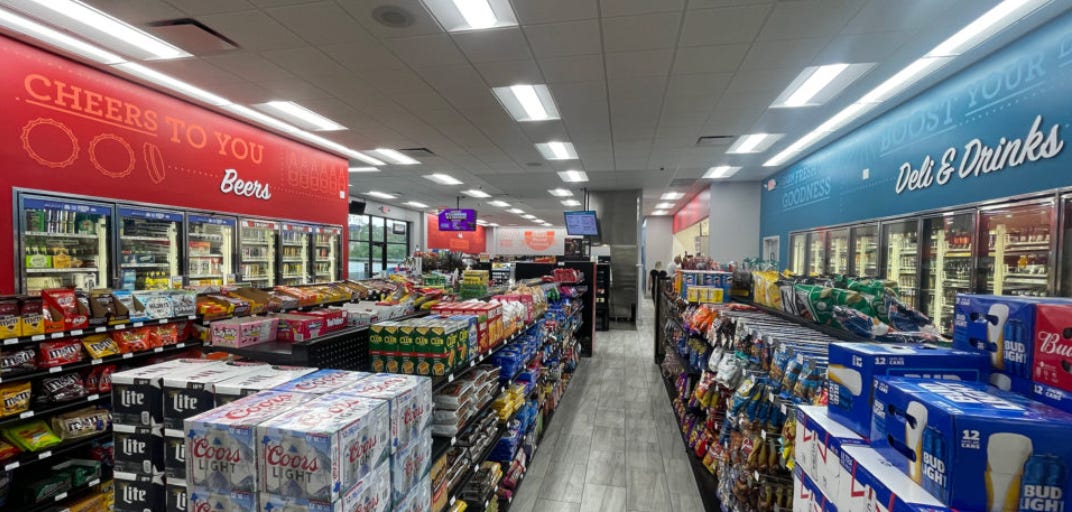
And when I do that, when I take the time to really listen late into the night, I find I’m more unhurried the following day. Less attracted, in other words, to convenience for its own sake. Dishes get washed with extra care. Clothes folded and tucked away more neatly. The bird feeder refilled more regularly – a convenience for them, no doubt.
Of course, one can do a bad job slowly just as well as quickly, and I make no claims as to the quality of my own, often slapdash work. My gift wrapping this Christmas, for example, was just as terrible as every other. Not that I didn’t try - only that I cannot do. (Yoda fans, please keep your mouths shut. I know there is “no try, only do.) What I do claim is that exposure to quality enhances one’s desire for more. When one demands quality in any aspect of life, it becomes less appealing to opt for schlock in other aspects. The pursuit of excellence makes one more attentive to that which is merde. And there is So. Much. Merde.
Our planet is buried under convenient shit. Bad but easy food. Bad but easy art. Bad but easy narratives, followed by bad but easy conclusions. Prioritizing convenience disincentivizes the slow, meditative work of contemplation. Of paying attention. Perhaps, even, of questioning.
I’m also a sucker for convenience. “Cheap, fast, and easy” works for me more often than it should. I am a notorious corner-cutter, as evidenced by my lack of proofreading these pieces. For each of the few things I do well, there are a thousand others to which I do not give my care.
Time is dear. Convenience has been sold to us as that which “saves” time. Inconvenience is that which bleeds away our remaining hours. But I wonder if we’ve got that equation somewhat reversed. After all, don’t we refer to the good moments in our lives are referred to as “quality time?” We use the phrase to stake out a distinction between the superficial and deep-seated. “Quality time” is time apart, but why should it be so? Time is time is time. It requires us to imbue it with meaning.
Instinctively, we think the oppose of “quality time” must be “wasted time,” those dawdling hours in which we do not much of anything at all. The phrase carries a kind of Calvinist judgement, harkening back to the “he who doesn’t work doesn’t eat” mentality of our colonial settler days, idle hands being the devil’s playthings and all. I suppose that made a lot of sense while scrabbling to stay alive in the wilds of what would become Connecticut. What was “convenience” to the Calvinist?
Convenience is as much – or more – about maximizing productivity as it is about reducing drudgery. But drudgery itself is misunderstood. Pulling a cart for somebody else is drudgery; pulling it for our loved ones is not. No matter how inconvenient, an act of love is never (well, maybe not never) drudgery.
The snow day is a joy because it removes any connotation of judgement from “wasted” time, time spent assembling those jigsaw puzzles and Rice Krispie treats or wrapped in a blanket by the fire. It’s a time-out. The snow day is an inconvenience, and a damned good one.
The film director Jim Jarmusch once said, “Fast, cheap, and good… pick two. If it’s fast and cheap, it won’t be good. If it’s cheap and good, it won’t be fast. If it’s fast and good, it won’t be cheap. We must pick two words to live by.”
We can substitute or add "good" to this as it works as well.
The New Yorker just published a profile of Willie Nelson for you to enjoy on your snow day!
https://archive.ph/tLWSc