
Safe Footing

My mom worked at the Social Security Administration for years. A satellite office in Raritan, New Jersey. It was a government job, steady employment after she and my dad divorced. She got the job with help from her new partner, who started working there after divorcing her husband.
Growing up, life was leaner. We never had much disposable income. Extravagance was a road trip to Hershey Park or a long weekend in Colonial Williamsburg. Extravagance was the VCR we got one year. A microwave oven. Mom and Elaine disliked their jobs, but they were two middle-aged lesbians without college degrees who’d been homemakers before entering the workforce. The Social Security Administration gave them livelihoods.
Dinnertime was often spent listening to Mom and Elaine discuss their days, which involved blizzards of impenetrable acronyms related to claims filed, claims misfiled, claims sent to wrong addresses or to the wrong people. I understood almost nothing that they were saying and didn’t care to learn. One could hardly imagine more boring table talk to a boy than this.
Then my dad died.
I was 12, my brother 14, my sister 10. The Social Security checks that were always meant for other people were now meant for us. We were his survivors. The Social Security checks that started coming offset the child support payments which we would no longer receive.
Thankfully, Dad had also purchased life insurance, but my brother and I agreed to give the bulk of that money to our sister, Susan, who has Down Syndrome. We each kept enough to get us most of the way through college, but no more. The life insurance money secured housing and care for my sister once she left home, but it wasn’t nearly enough to support her for life.
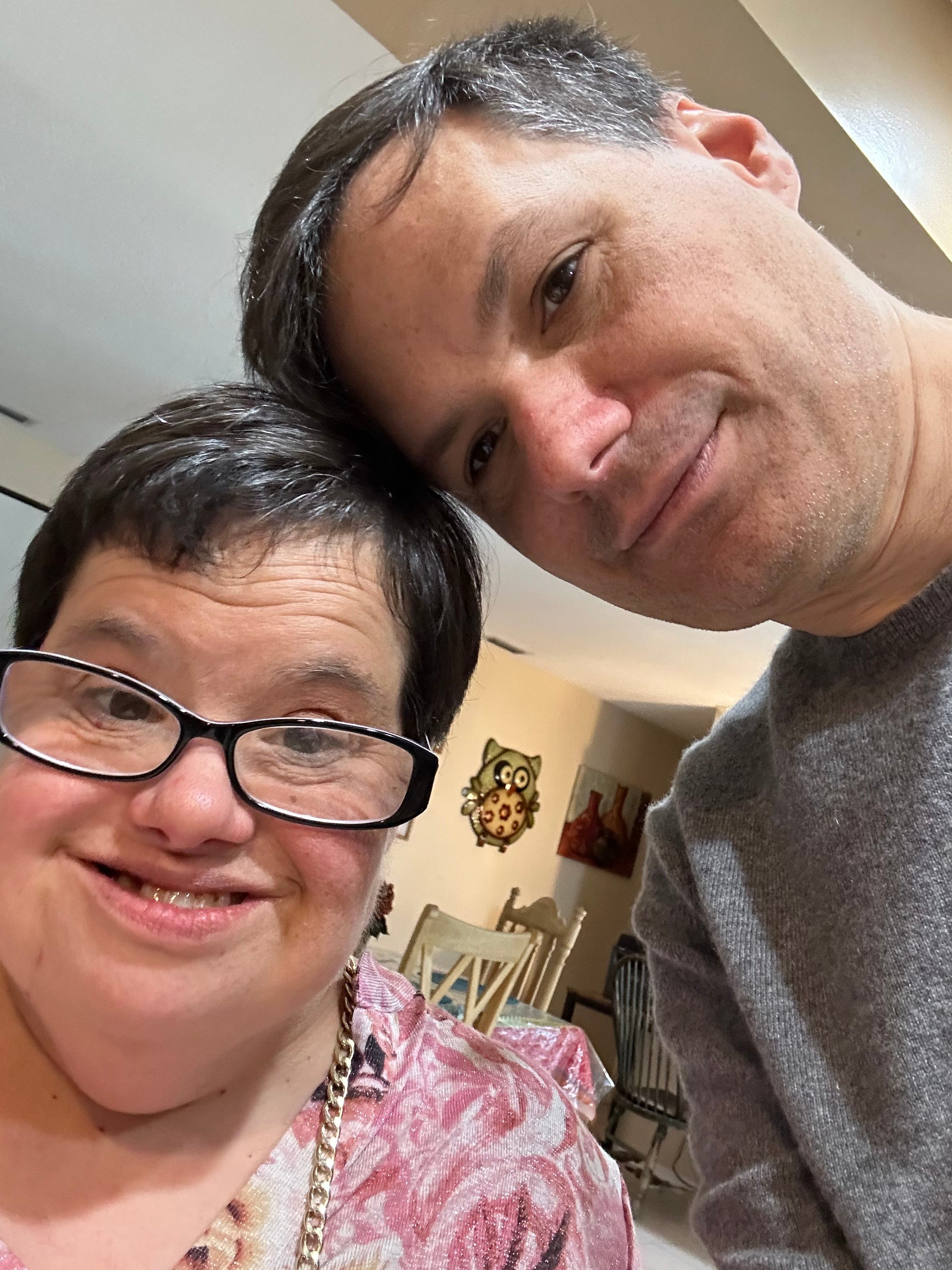
Susan isn’t one of those people with Downs you sometimes see on feel-good McDonalds commercials. She’s much lower-functioning, incapable of caring for herself. When my dad died, there was no way to know how, or if, my brother and I would make our way through the world. I was already set on becoming an actor. I assumed I would be poor. My brother had no idea what he was going to do with his life. We’d already lost one parent and we knew, at some point, our mother would also die. Social Security would provide Susan safe footing on a rocky road.
As it happens, my brother and I both turned out to be relatively successful. We’re in a position to help Susan if she needs it, but we both have our own kids who lead expensive lives (“expensive lives” = college.) There have been years, especially in the recent past, when I was hardly working at all. Years when I was helping my mother financially as her health deteriorated. Years when I worried that my career was entirely over and we would need to deplete our retirement savings just to get by. Through all of those years, Susan’s checks kept coming.
Those monthly checks aren’t a lot of money, but they keep her housed and clothed and fed. Susan is 51 now. She lives in a group home my mom helped found over twenty years ago. The life insurance money is long gone but Susan’s life is secure. She has enough, and enough for somebody like Susan is a blessing.
So when Commerce Secretary, the billionaire Howard Lutnick, declares in a television interview that only fraudsters would complain about missing checks, I can’t help but think about my sister. She cannot operate a telephone to complain about a missing check. Cannot file a claim. Would not even know the money was gone until the house shut down.
Is my sister defrauding the government? Is she participating in a Ponzi scheme, as Elon called Social Security? Is she victimizing Musk and his team of wizards at DOGE? I don’t think my sister is waste. Or fraud. Or abuse. Instead, I think she’s exactly who was intended to receive benefits from an insurance program designed to help keep the elderly and vulnerable from lives of penury.
I still remember visiting my mom in the hospital towards the end of her life. She was watching the news and cursing at Trump, then running for his first term. She knew the danger he posed. Knew the con he was running on the nation. Knew that he didn’t give a shit about people like her - and certainly not people like Susan.
My story is one of millions, I know. It’s not a particularly dramatic story, but that’s because Social Security and other governmental programs minimized the drama and provided a platform for my family so that we could be in a position to help my sister if she needs it. And for that, I am grateful.
I don’t know what’s going to happen to Social Security, or Medicare or Medicaid (which my sister also receives), but I know what those programs have meant for my family. I know what they meant for the thousands of retirees and widows and children who traipsed through my mom’s office every weekday over the years. And I know what it would mean if those checks no longer arrived.
Love this article. I didn’t ask to become disabled at 30, prime of my life. I had no option but to file for disability. That’s not the life I wanted. This is not the life I wanted. I’m educated. Yet now I rely on this monthly check for my lively hood. How can I not question if I miss a check? It’s the only thing paying my bills. I am now almost 48. Disabled for 18 years now. I’m very scared for my wellbeing as well as your sisters and everyone else. Thank you for sharing. Your sister is lovely.
Crazy how much you’ve made me laugh in my life vs how much you’ve made me cry recently. Beautiful illustration of what social safety nets are for, and why a society based on cruelty must be vigorously opposed.